- Saturday - Thursday: 8:00 - 16:00
- +98-3133686229





Plate washer
What is a plate gasket? Plate heat exchangers consist of a number of metal plates that are placed between two fixed frames. One of the main components of these exchangers is the plate gasket, which is responsible for sealing the plates and creating a suitable path for the passage of fluids.
These types of gaskets are used in various industries, including marine, power plants and petrochemicals, and are manufactured from NBR, EPDM and VITON materials, depending on the type of fluid, temperature conditions and depth of the plate grooves. In addition to playing a key role in preventing leaks, these gaskets have a direct impact on the efficiency and lifespan of heat exchangers.
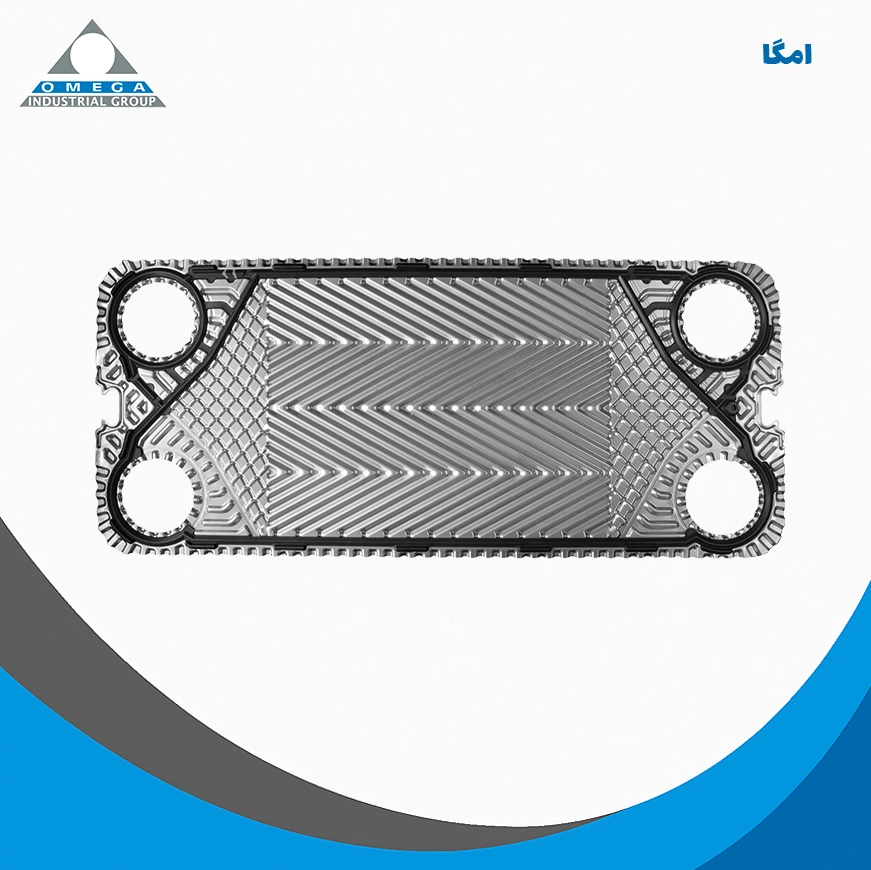
Key Features of Heat Exchanger Gaskets

Heat exchanger gaskets are used in high temperature and high pressure environments, so they must be highly resistant to these conditions to maintain optimal system performance.
One of the main functions of these gaskets is to provide a precise seal between the heat exchanger plates to prevent fluid leakage and ensure the heat exchange process is carried out properly.
Some of these gaskets are flexible depending on the pressure and temperature, which improves heat transfer performance and increases system efficiency.
In many industries, the fluids used have specific chemical compositions; for this reason, heat exchanger gaskets must be resistant to various chemicals and have low reactivity.
These types of gaskets are usually in contact with corrosive materials and chemical solvents, so they must be corrosion resistant to have a long lifespan and not require frequent replacement.
